Safety features in lifting equipment protect workers from crush injuries, falling loads, and equipment failures during industrial operations. Every year, dozens of Australian workers get hurt because lifting hoists lack proper safeguards, or operators miss warning signs before something goes wrong.
To prevent this, companies like https://www.rud.com.au supply certified lifting equipment that meets local safety standards across Brisbane and regional Queensland. Our chains, hoists, and handling solutions serve heavy industry operations, where a single mistake can shut down an entire site. So, we’re very aware of the safety things and keen to share with you.
This guide covers the safety features you need before choosing lifting gear. Plus, you’ll learn which protections prevent failures, how emergency controls work, and what inspection points count most for heavy vehicle hoists.
How Load Ratings Prevent Catastrophic Failures in Heavy Duty Lifting
Load ratings usually define the maximum weight an item of equipment can handle safely without structural failure or collapse. You’ll find these weights stamped directly onto chains, hooks, and hoists as permanent markings. When operators ignore those numbers, entire sites face risks as loads shift mid-lift and components bend under stress they weren’t built for.
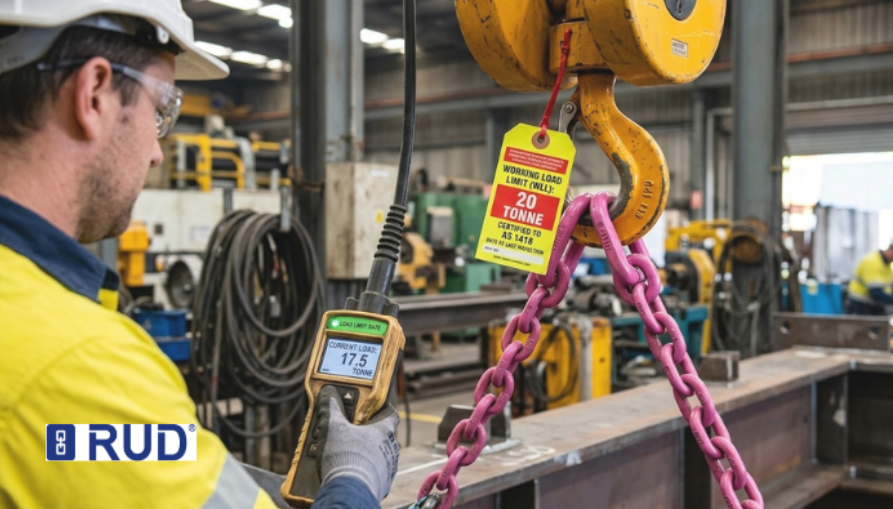
To understand how this protection works, we’re breaking down the helpful components below:
Working Load Limit Markings
Permanent markings indicate the maximum safe loads tested to international standards such as AS 1418. These tags need to stay legible throughout the equipment’s service life for safety. And you have to check them during routine inspections and replace gear when labels fade beyond recognition.
In our 40+ years serving Australian mining and construction sites, we’ve seen that faded load tags are the most common compliance failures.
For this reason, Australian suppliers like RUD Australia provide lifting chains with permanent load markings across their ICE Grade 120 and VIP Grade 100 ranges, specifically designed for mining, construction, and heavy industrial applications.
Safety Factor Standards
Beyond basic load markings, design loads typically run 4:1 or 5:1 ratios above working limits (the 4:1 ratio means the chain won’t snap until it hits four times the rated load). In other words, higher factors account for dynamic loads and shock forces during operation.
That’s why industry knowledge tells us that sudden stops, swinging loads, and uneven weight distribution create forces well beyond static measurements. In addition, standards like AS 1418 define minimum safety requirements for industrial lifting tasks across Australia.
Overload Protection Systems
In an overload protection system, load limiters cut power when the load exceeds the working load limit (WLL) marked on the hoist, stopping operation before structural damage occurs.
Beyond that, mechanical stops halt crane travel at rated capacity to prevent overload. And warning alarms give operators advance notice before reaching maximum loads, so they can reposition or redistribute weight before risks escalate.
Emergency Controls That Ensure Safety
These days, modern emergency controls work quicker than human reaction time. As a result, you’ve got about half a second to react when a load starts swinging wrong. But most operators can’t hit a button that fast.
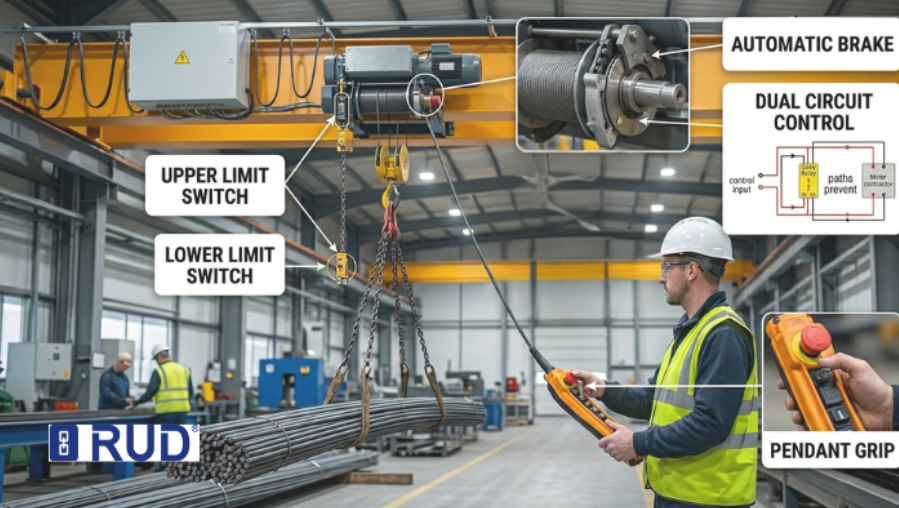
Here’s how these safety systems protect workers on the job:
- Dual Circuit Systems: Independent electrical paths mean one component failure won’t disable the emergency shutdown. Besides, backup protection stays active when primary systems go down during equipment faults or power surges across hoists.
- Automatic Load Hold: When power cuts happen, spring-loaded brakes grip immediately. Therefore, loads stay secured in place rather than dropping during electrical faults (free-fall from even two metres can kill someone standing below).
- Upper and Lower Limit Switches: Travel limits stop movement before chains run out or loads hit overhead structures, which helps prevent equipment damage and worker injuries.
- Pendant Safety Interlocks: Operators must maintain a constant grip on the controller. The moment you release the controller or drop it, all movement stops, which reduces risk during unstable handling conditions.
Emergency controls only work if the equipment underneath them stays sound. That’s why regular maintenance and inspection schedules ensure these safety features operate when risks appear.
Inspection Points: What Heavy Duty Gear Needs Regular Checks
Heavy-duty gear needs daily visual checks and monthly detailed inspections to catch wear before components fail. These maintenance schedules keep lifting equipment safe across all industrial tasks.
Focus on these three areas during routine inspections:
Chain and Wire Rope Wear Indicators
Stretching beyond manufacturer tolerances means chains need replacement before failure happens on the job. In fact, individual link deformation, cracks, or surface corrosion sometimes compromise entire assemblies. So one damaged link makes the whole chain unsafe for handling loads (you’d be surprised how many operations skip this until something breaks).
Meanwhile, wire rope damage appears through broken strands, kinking, or reduced diameter measurements. That’s why look for quality lifting gear with consistent dimensions and durable construction that resists wear under normal use.
Brake and Clutch Mechanisms
Friction material thickness must meet the manufacturer’s minimum specifications for hoists to function correctly. Because adjustment gaps outside the tolerance level can cause delayed stopping or load slippage during operation.
From what we’ve seen in the Ipswich facility, brake wear often goes unnoticed for months. In such cases, routine checks help identify wear early and maintain safe operation.
Hook Latches and Attachment Hardware
Safety latches need to close completely without binding or excessive play before you trust them with loads. After all, hook throat openings that increase 15% beyond original dimensions indicate wear limits where accessories no longer stay secure.
At the same time, bearing surfaces require smooth rotation without grinding or resistance under load. Built-in swivels also need to handle tasks safely without seizing up during operation.
Once you’ve confirmed the gear itself is safe, the next question becomes whether your operators can actually see what they’re doing.
See also: How to Choose the Best Dog Grooming Near Me Without Regret
Operator Visibility and Control Features for Heavy Vehicle Hoists
When operating a crane, can you see the load, the rigging, and everyone in the drop zone from where you’re standing? Well, ask any crane operator in Brisbane, and they’ll tell you how visibility directly affects safe lifting operations.
Clear sightlines from the operator position to the load and the surrounding work area reduce collisions with workers or workshop structures during heavy vehicle hoist tasks. Also, lighting systems mounted on hoists illuminate dark bays in poorly lit facilities across Australia.
Mirrors or camera systems also extend visibility around blind corners where loads swing during travel across the work zone (no one wants to play guessing games with a three-tonne load overhead). These solutions help operators working on trucks, buses, or heavy vehicle equipment in warehouses and industries.
Besides seeing the load, operators need controls that make sense under pressure. For example, wireless remote controls let operators move to optimal viewing positions rather than staying tethered to fixed locations during lifting activities. Once operators position themselves clearly, colour-coded direction indicators on controls reduce confusion when multiple workers share hoists across shifts.
Emergency stop buttons generally sit at both remote and fixed control stations for redundant safety coverage. Beyond that, operators position loads more safely when they can see rigging points, attachment hardware, and potential pinch points throughout the lift cycle.
At the same time, clearly labelled direction buttons also reduce human error during high-stress tasks in busy industrial environments.
Bottom line: When visibility and control work together, operators can make faster, safer decisions. Besides, using well-designed hoists and proper training improves efficiency, reliability, and workplace safety across lifting operations in Australia’s manufacturing, logistics, and service sectors.
Keep Your Crew Safe with the Right Gear
Safety features in lifting equipment protect workers and keep your business running without injuries or downtime. Plus, the right hoists offer quality construction, emergency controls, and visibility solutions that meet Australian safety standards. Choose gear with proper load ratings and inspection points that you will monitor over time.
Regular maintenance often catches problems before they become accidents. So train your team to spot wear indicators and operate controls properly to reduce risks across all lifting tasks.
RUD Australia provides a range of certified lifting solutions with the safety features and service support your operations need. Contact our team to find equipment built for Australia’s demanding industries.