Artificial Intelligence (AI) has evolved from being a futuristic concept to a real-world catalyst driving transformation across industries. From intelligent chatbots to generative design systems, AI is reshaping how businesses operate, make decisions, and serve their customers. As the world continues to embrace automation and intelligent workflows, companies that leverage AI effectively will be the ones defining the future of innovation.
In this article, we’ll explore how AI is revolutionizing industries, the role of AI agents in enterprise transformation, and how Agentic RAG (Retrieval-Augmented Generation) is redefining how organizations use information for smarter outcomes.
Understanding Artificial Intelligence and Its Core Capabilities
At its core, Artificial Intelligence refers to machines capable of performing tasks that typically require human intelligence — such as reasoning, problem-solving, learning, and perception. Modern AI is built on advanced technologies like machine learning (ML), natural language processing (NLP), computer vision, and generative AI.
These technologies enable systems to process vast amounts of data, identify patterns, and make predictions — often faster and more accurately than humans. Today, AI isn’t limited to research labs; it’s being applied across real-world use cases that are revolutionizing industries.
See also: Crispy, Healthy, and Effortless: Finding the Best Air Fryer in India
How AI Is Transforming Key Industries
1. Healthcare: From Diagnosis to Drug Discovery
AI algorithms are helping doctors diagnose diseases with greater accuracy using imaging data, predictive models, and digital twins. Generative AI models are accelerating drug discovery, cutting down years of research into a matter of months.
2. Finance: Driving Smart Risk and Fraud Management
Banks and fintechs are using AI for fraud detection, credit risk assessment, and automated trading. AI systems can analyze transactional data in real-time to detect anomalies — enhancing security and customer trust.
3. Manufacturing: Intelligent Automation and Predictive Maintenance
Factories are increasingly adopting AI-driven predictive maintenance solutions that anticipate equipment failures before they occur. Combined with robotics and IoT data, AI ensures smoother, more efficient operations.
4. Retail and E-commerce: Personalization at Scale
AI-powered recommendation engines have redefined the shopping experience. Retailers now analyze user behavior to personalize product suggestions, pricing, and even marketing campaigns — improving conversions and customer satisfaction.
The Rise of AI Agents in Business Operations
To streamline complex workflows, organizations are turning to AI agents — autonomous systems capable of performing specific business tasks with minimal human intervention.
A great example of this is showcased by ZBrain’s AI Agents, which are designed to help enterprises automate diverse processes such as invoice validation, PII redaction, customer support, and order management.
These AI agents combine machine learning, NLP, and automation to deliver end-to-end solutions that improve operational efficiency and reduce human errors.
Benefits of AI Agents
- Scalability: Handle thousands of tasks simultaneously.
- Accuracy: Minimize human errors in repetitive operations.
- Cost Efficiency: Reduce operational costs by automating manual tasks.
- 24/7 Availability: Work round the clock, ensuring continuous productivity.
In industries such as logistics, healthcare, and finance, AI agents are now integral to managing workflows and decision-making processes — freeing human teams to focus on higher-value work.
Agentic RAG: Enhancing AI Intelligence Through Contextual Understanding
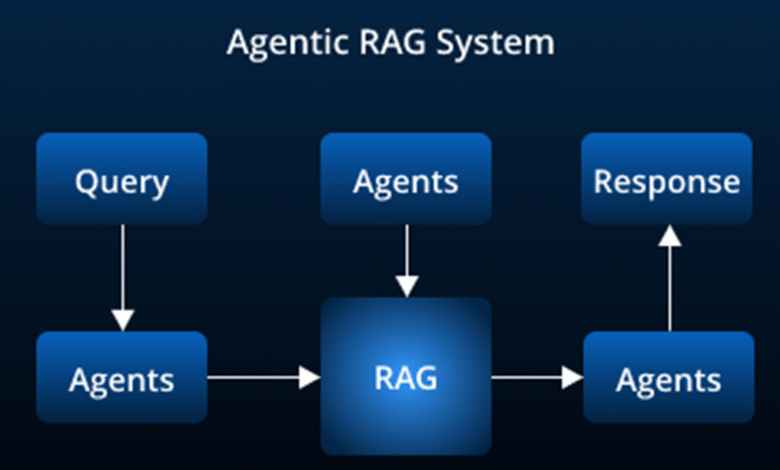
While generative AI can produce impressive results, its responses sometimes lack real-world accuracy or contextual depth. This is where Agentic RAG (Retrieval-Augmented Generation) comes in — a breakthrough in the AI landscape that enhances generative AI models by connecting them with verified, domain-specific data sources.
To explore how this works, check out ZBrain’s Agentic RAG, a cutting-edge solution that blends retrieval mechanisms with generation models to produce accurate, context-aware outputs.
How Agentic RAG Works
- Data Retrieval: The system retrieves relevant information from trusted data sources.
- Contextual Generation: It then feeds this information into a generative AI model.
- Validated Output: The result is accurate, explainable, and relevant — minimizing the risk of hallucination or misinformation.
This approach bridges the gap between static AI models and dynamic real-world knowledge, making it ideal for applications like document analysis, knowledge management, and intelligent search systems.
The Future of AI: From Automation to Intelligence
As AI continues to advance, the focus is shifting from automation to autonomous intelligence — where systems don’t just execute commands but make informed, independent decisions. AI agents powered by Agentic RAG architectures will play a crucial role in this evolution, enabling organizations to deploy adaptable, self-learning systems that continuously improve over time.
In the near future, AI will not just assist humans — it will collaborate with them, leading to more creative, efficient, and data-driven workplaces.
Conclusion
AI is no longer a futuristic dream; it’s a present-day necessity driving the next wave of business transformation. From intelligent agents optimizing workflows to Agentic RAG solutions enhancing contextual intelligence, organizations that adopt AI today are setting themselves up for long-term success.
By leveraging platforms like ZBrain, businesses can tap into advanced AI technologies that automate, optimize, and innovate every aspect of operations — ensuring they stay ahead in the age of intelligent automation.